Achieve a Turquoise look with keratopigmentation
Changing eye color to blue – Keratopigmentation in Switzerland
Keratopigmentation in Geneva and Paris
Surgery to change eye color
Turquoise is one of the most enchanting shades in the Kerato World collection. At the crossroads between azure blue and emerald green, this shade evokes the clarity of Polynesian waters and the preciousness of antique gems. Turquoise is not a conventional color; it is a visual signature for patients who seek a vibrant, solar, and decidedly exotic gaze.
Thanks to the FAKtP (Femtosecond Assisted Kerato-pigmentation) technique, the application of the Turquoise pigment achieves a clarity that nature only rarely produces with such purity, offering a spectacular metamorphosis while maintaining a crystalline elegance.
The aesthetics of Turquoise
The particularity of Turquoise lies in its chromatic balance. Neither too cold like a polar blue, nor too organic like an olive green, it offers a perfect synthesis that illuminates the face.
A “Lagoon” look
Turquoise possesses a unique capacity to “open up” the gaze. By bringing this cyan-azure shade into the corneal stroma, we create a luminous focal point that immediately draws attention. It is a color that evokes freshness and vitality. It is particularly effective for breaking through the opacity of very dark irises, providing them with a new transparency.
Versatility and reflections
One of the charms of Turquoise is its reactivity to the environment:
- Under a blue sky: The bluish pigments stand out, giving an aquatic and deep allure.
- Under warm artificial light: The hints of green are accentuated, offering a more emerald and mysterious appearance. This duality allows the gaze to remain vibrant and change subtly throughout the day, thus mimicking the natural variations of a light iris.
Before/After: Turquoise
Surgery to change eye color to blue
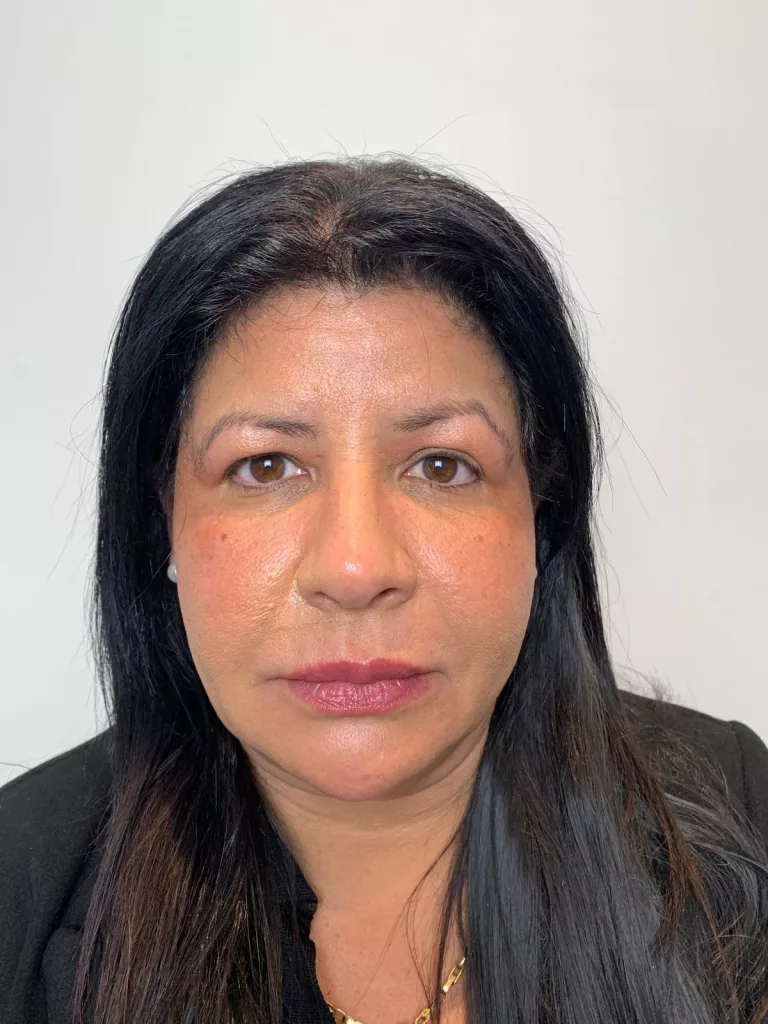
Avant
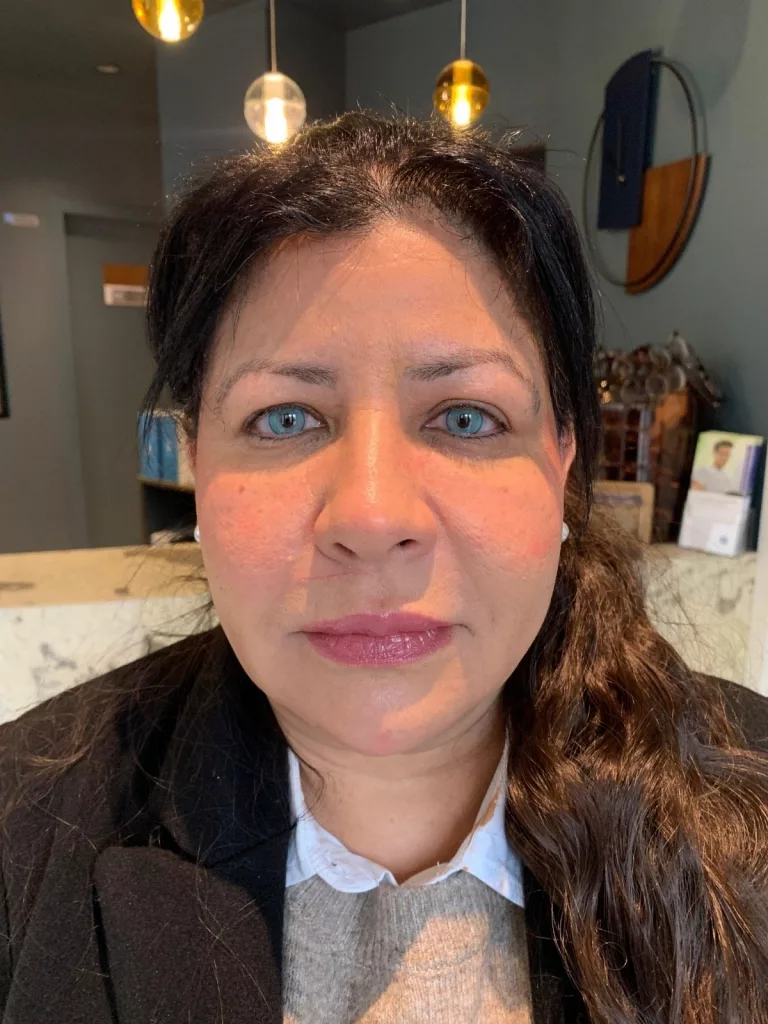
Après
Keratopigmentation in Switzerland
Certified biocompatible pigments
Obtaining a stable Turquoise that does not turn into dark green or grey-blue requires high-precision formulation. For this shade, Kerato World uses biocompatible pigments.
Biocompatibility
The Turquoise pigment is a CE-certified medical device, ensuring optimal safety for ocular health.
- Biological safety: Formulated without toxic or irritating components, it is designed to be perfectly inert in the cornea. Dr. Hojabr has selected this pigment for its ability to integrate into corneal fibers without causing a rejection reaction.
- Photostability: Cyan shades are often sensitive to UV rays. The technology used by our partner laboratory ensures maximum resistance to photodegradation. Your Turquoise will retain its tropical vividness and brilliance without fading over time.
The precision of the Femtosecond Laser
The “crystalline” rendering of Turquoise depends on the homogeneity of the tunnel created by the laser. The Femtosecond Laser allows the surgeon to prepare a space of nanometric regularity. This precision ensures that the Turquoise pigment diffuses without spots or shadows, creating that uniform and translucent veil of color that defines the excellence of the FAKtP protocol.
FAKtP keratopigmentation in Geneva & Paris
Who is Turquoise for?
Turquoise is a bold color that harmonizes beautifully with many phototypes, especially those that already benefit from a certain warmth in the skin.
Morphology analysis
- Tanned, golden, or matte skin: This is the most spectacular match. Turquoise enhances tanned complexions and creates a permanent “post-vacation” contrast.
- Brown or golden blonde hair: This shade perfectly complements the warm reflections of the hair, bringing a touch of freshness that balances the entire face.
- Brown iris base: Turquoise is an excellent choice for brown eyes, as it “covers” the dark base with sufficient intensity to radically transform the color while still playing with the dark reflections of the pupil.
A unisex color
Although highly prized by female patients for its “jewel-like” appearance, Turquoise is attracting more and more men who wish for a clearer and more assertive gaze, evoking the bright eyes of island populations.
Simulation and validation
During your consultation, Dr. Hojabr uses our HD simulation tools to project Turquoise onto your eyes. This is a crucial step: you will be able to visualize whether you prefer a “Pastel Blue” Turquoise (very light) or an “Emerald” Turquoise (greener). This personalization ensures that the final result will be in perfect harmony with your lifestyle.
The FAKtP intervention
Performed under local anesthesia via eye drops, the procedure lasts about 45 minutes. The laser creates the micro-tunnel, and Dr. Hojabr proceeds with the millimeter-precise insertion of the pigments. Recovery is quick: the change is visible as soon as you leave the operating room. The shade will take on its final brilliance and natural transparency after a stabilization phase of 8 to 12 weeks.
Frequently asked questions about Turquoise
Can Turquoise look artificial?
Dr. Hojabr’s expertise lies in dosing the pigment density to avoid the “contact lens” effect. By respecting the pupillary zone and using the natural transparency of your cornea, Turquoise integrates as an integral part of your eye.
Can I tone down the Turquoise if it’s too vivid?
Turquoise is an intense color. If after healing you desire a more sober result, a touch-up session can be considered to add shades of grey (Grey Paris) and thus slightly “extinguish” the saturation for a more discreet rendering.
Conclusion
Turquoise is the shade of escape and light. At Kerato World, we have mastered this pigment to offer our patients a gaze of exceptional clarity, supported by the scientific rigor of the FAKtP technique. It is the choice for those who want their gaze to be a constant source of radiance and freshness.